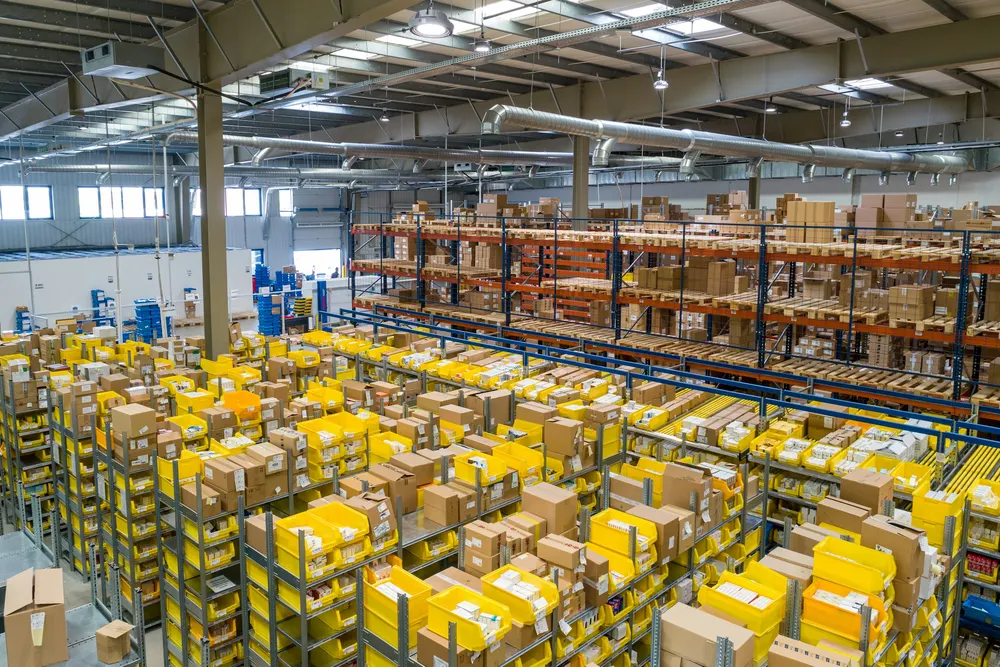
A business may store, handle, transfer or process goods that it does not own. Supplier consignment stock, customer-provided materials and goods held at customer locations all require accurate tracking of physical quantities and legal ownership.
The challenge becomes more complicated when the same Item is held in multiple locations under different ownership arrangements. A warehouse may contain company-owned stock, supplier-owned consignment stock and customer-owned materials at the same time.
If the business tracks only the Item and quantity, employees may not know which goods can be sold, consumed, transferred or returned. Finance may also receive stock figures that do not reflect the actual ownership position.
A structured inventory process should therefore distinguish between physical custody and ownership. ERPNext provides warehouse, stock movement, stock ledger and customer-provided material workflows that can form part of this process. General consignment ownership tracking, however, should be designed and validated for the specific business arrangement.
The key principle: Track who owns the goods separately from where the goods are stored. Physical stock, stock in custody and inventory owned by the company are not necessarily the same quantity.
1. Understanding Consignment Stock and Customer-Owned Inventory
Before designing an inventory process, the business should identify the type of ownership arrangement involved. The same physical stock movement can have a different commercial and accounting meaning depending on the agreement between the parties.
What is consignment stock?
Consignment stock is inventory held by one party while ownership remains with another party until an agreed event occurs. That event may be a sale, consumption, withdrawal or another condition specified in the contract.
The party holding the goods is generally responsible for agreed custody and reporting activities, but does not necessarily own the inventory.
Two common arrangements are:
- Supplier-owned stock at your premises: A supplier places goods in your warehouse. You report usage or sales, and the supplier is paid according to the consignment agreement.
- Your stock at a customer's premises: You place goods at a customer's location. The customer reports what has been sold or consumed, and ownership transfers according to the agreed terms.
What is customer-owned inventory?
Customer-owned inventory refers to goods or materials that belong to a customer but are physically held by your business.
For example:
- A manufacturer receives customer-owned raw materials for processing.
- A repair centre stores a customer's equipment while repairs are being completed.
- A contractor holds materials supplied by a project owner.
- A warehouse operator stores goods on behalf of several customers.
- A service provider holds spare parts belonging to a customer.
The business may be responsible for receiving, storing, identifying, moving or processing these goods, but the commercial agreement determines ownership and responsibility.
How the arrangements differ
| Arrangement | Physical Location | Owner | Typical Business Activity |
|---|---|---|---|
| Supplier-owned consignment | Your warehouse | Supplier | Store, sell or consume under agreement |
| Your consignment stock | Customer's premises | Your company until the agreed transfer event | Place stock, monitor usage or sales, settle later |
| Customer-owned materials | Your warehouse or facility | Customer | Store, process, repair or consume with authorisation |
| Third-party stored goods | Your warehouse | External customer or owner | Receive, store, pick, dispatch and report |
These arrangements should not be treated as interchangeable. The receiving, issue, invoicing and accounting processes may be different.
2. Why Ownership-Based Inventory Tracking Matters
A traditional stock report may show how many units of an Item are physically present in a warehouse. However, it may not answer the most important questions when goods have different owners.
- How much stock belongs to the company?
- How much stock belongs to suppliers?
- How much stock belongs to customers?
- Which goods can be sold or consumed?
- Which goods require owner approval before movement?
- Which stock must be returned?
- Which quantities have already been sold, consumed or damaged?
- What amount is payable to a supplier after consignment sales?
- What quantity must be reported to each customer or owner?
What can go wrong without ownership tracking?
| Control Gap | Possible Business Impact |
|---|---|
| Supplier-owned goods mixed with company stock | Employees may sell or consume stock without following the consignment agreement. |
| Customer-owned materials recorded as company purchases | Inventory value and supplier balances may be misstated. |
| Goods at customer locations are not tracked | The business may lose visibility of its own inventory outside its premises. |
| Issues are not linked to an owner | Usage and settlement reports may be inaccurate. |
| Returns are recorded without the original reference | Ownership balances and quantities become difficult to reconcile. |
| Damaged or missing goods are not reported separately | Disputes may arise over responsibility and settlement. |
| Stock is counted without checking ownership | Physical quantity may be correct while the ownership report is wrong. |
Ownership tracking is therefore important for operational control, customer reporting, supplier settlement, inventory valuation and audit readiness.
3. Three Practical Inventory Ownership Scenarios
The best way to understand the process is to look at how ownership changes—or does not change—as goods move through the business.
Scenario A: Supplier-owned consignment stock at your warehouse
A supplier places 500 units of an Item at a distributor's warehouse. The distributor is allowed to sell the goods and report the quantities sold at agreed intervals. The supplier retains ownership until the contractual transfer event.
| Movement | Quantity | Supplier-Owned Balance |
|---|---|---|
| Consignment goods received | +500 | 500 |
| Goods sold under agreement | -120 | 380 |
| Goods returned to supplier | -30 | 350 |
| Remaining physical consignment stock | 350 |
The distributor needs to report the 120 units sold and the 30 units returned. The remaining 350 units should still be identifiable as supplier-owned stock.
Scenario B: Your stock placed at a customer's location
A distributor places 300 units at a retailer's premises. The retailer sells or consumes the goods and reports the quantity periodically. Under the agreement, ownership remains with the distributor until the agreed sale or consumption event.
| Movement | Quantity | Company-Owned Balance at Customer |
|---|---|---|
| Goods placed at customer location | +300 | 300 |
| Customer reports sales or usage | -90 | 210 |
| Goods returned by customer | -20 | 190 |
| Remaining goods at customer location | 190 |
The distributor should not lose visibility simply because the stock has left its own warehouse. The goods remain part of the company's inventory if ownership has not transferred under the agreement.
Scenario C: Customer-owned materials held at your facility
A customer sends 200 components to a manufacturer for processing. The manufacturer stores the components, consumes 150 in an authorised production process and returns 50 unused components.
| Movement | Quantity | Customer-Owned Balance |
|---|---|---|
| Customer materials received | +200 | 200 |
| Materials issued to authorised job | -150 | 50 |
| Unused materials returned | -50 | 0 |
The manufacturer needs to track the customer's materials separately from its own raw materials. The receipt should be linked to the customer, job or production reference, and the issue should be supported by an authorised transaction.
Practical lesson: A warehouse balance should answer two questions: how much is physically present, and who owns it? If the system cannot distinguish these positions, the business needs an additional ownership control.
4. What an Inventory Ownership Register Should Contain
Whether the business uses an ERP, warehouse application or a controlled register, every consignment or customer-owned stock record should contain enough information to identify the goods and explain their current status.
Recommended tracking fields
| Field | Why It Matters |
|---|---|
| Item Code and Description | Identifies the product or material. |
| Owner Type | Distinguishes company-owned, supplier-owned and customer-owned stock. |
| Owner Name | Identifies the supplier, customer or third-party owner. |
| Physical Warehouse | Shows where the goods are stored. |
| Owner Reference | Links the stock to an agreement, contract or customer reference. |
| Receipt Date | Records when custody began. |
| Received Quantity | Records the original quantity received. |
| Issued or Consumed Quantity | Tracks authorised usage or sale. |
| Returned Quantity | Tracks goods returned to the owner or another location. |
| Available Balance | Shows the remaining quantity under custody. |
| Batch or Serial Number | Supports traceability for controlled or identifiable Items. |
| Condition | Distinguishes usable, damaged, quarantined or rejected goods. |
| Ownership Transfer Trigger | Records when ownership changes under the agreement. |
| Settlement Status | Tracks quantities awaiting supplier or customer settlement. |
| Expected Return or Review Date | Helps identify stock that needs follow-up. |
Use a clear ownership classification
A practical classification may include:
- OWN: Inventory owned by the company.
- SUP-CONS: Supplier-owned consignment stock held by the company.
- CUST-OWN: Customer-owned inventory held by the company.
- OUR-CONS: Company-owned inventory held at a customer or third-party location.
These are illustrative codes, not standard ERPNext values. The business should use a consistent naming convention that fits its reporting and implementation requirements.
Do not rely on the Item Code alone
The same Item Code may exist under more than one ownership arrangement. Creating separate Item masters for every owner is not always necessary and can create duplicate product records.
A better design may use a shared Item master with a separate ownership reference, batch or serial identification, warehouse/location information and a transaction history. The exact approach depends on the required stock and accounting controls.
5. A Controlled Process for Receiving and Tracking Stock
A consistent process should cover the complete lifecycle of goods: receipt, storage, movement, issue, consumption, sale, return, reconciliation and final settlement.
Step 1: Confirm the ownership agreement
Before goods arrive, document the commercial arrangement.
Confirm:
- Who legally owns the goods.
- When ownership transfers, if applicable.
- Who is responsible for loss, theft or damage.
- Whether goods may be sold, consumed or transferred.
- How usage or sales must be reported.
- How frequently balances must be reconciled.
- How unused goods are returned.
- How supplier or customer settlement is calculated.
Step 2: Identify the owner and the goods
Record the owner, Item, quantity, unit of measure and relevant contract or consignment reference.
Where necessary, capture batch numbers, serial numbers, expiry dates, condition and supporting documents.
Step 3: Record physical receipt
The receiving team should count and inspect the goods before confirming the quantity.
The receipt record should identify:
- Who delivered the goods.
- Who owns the goods.
- Which warehouse received them.
- What quantity was accepted.
- What quantity was rejected or damaged.
- Which reference authorises the receipt.
Step 4: Store stock in an identifiable location
Use a separate warehouse, sub-warehouse, storage zone or clearly identified bin arrangement where appropriate.
Physical segregation can reduce picking errors, but it should not be treated as proof of legal ownership. The ownership record must remain linked to the inventory transactions.
Step 5: Control every issue, sale or consumption
Do not allow stock to leave the custody location without an authorised record.
Depending on the agreement, an issue may represent:
- A sale to a customer.
- Consumption in production.
- Use in a repair or service job.
- A transfer to another warehouse.
- A return to the owner.
- A write-off for damage or loss.
The transaction should identify the owner and the reason for the movement.
Step 6: Record ownership transfer when the contractual event occurs
In a consignment arrangement, ownership may transfer when goods are sold, consumed, withdrawn or another agreed condition is met.
The business should record the transfer event using the appropriate purchasing, sales or accounting workflow. The physical quantity may remain in the same location even though the ownership position changes.
Step 7: Reconcile quantities with the owner
At agreed intervals, compare the business's records with the supplier's or customer's statement.
Investigate differences in:
- Receipts.
- Sales or consumption.
- Returns.
- Transfers.
- Damaged or missing goods.
- Ownership transfer dates.
- Unsettled quantities.
Step 8: Complete the settlement or return process
Prepare the supplier settlement, customer usage report, purchase invoice, sales invoice or return documentation according to the agreement.
The ownership register should show which quantities have been settled, returned, transferred or remain under custody.
6. Managing Ownership and Custody in ERPNext
ERPNext provides standard inventory building blocks such as Items, Warehouses, Stock Entries, Purchase Receipts, Delivery Notes, Stock Ledger reports and Stock Reconciliation. These can help manage physical stock movements and traceability.
However, businesses should distinguish between standard stock-location tracking and legal inventory ownership. A warehouse identifies where stock is recorded; it does not, by itself, establish who owns the goods.
Step 1: Design the warehouse structure
Create warehouses that reflect the physical storage and custody arrangements.
For example:
| Warehouse | Purpose |
|---|---|
| Main Warehouse | Company-owned inventory. |
| Supplier Consignment | Supplier-owned stock held at your premises. |
| Customer-Owned Materials | Materials received from customers. |
| Customer Consignment Location | Company-owned goods held at a customer's location. |
| Quarantine / Damaged | Goods that cannot be treated as available stock until reviewed. |
These are illustrative warehouse names. The actual structure should reflect the company's physical locations, accounting design and reporting requirements.
Step 2: Define the ownership tracking method
For general consignment arrangements, decide how the owner will be recorded and linked to stock transactions.
Depending on the requirements, the implementation may use:
- Custom fields on relevant stock documents.
- An ownership or consignment reference record.
- Batch or serial-level identification where applicable.
- Separate warehouses or storage locations.
- Custom reports showing quantity by Item, owner and location.
- Workflow rules controlling receipt, issue, transfer and settlement.
The design should make it possible to trace every stock movement back to the correct owner and agreement. If a custom ownership register is required, it should be linked to the relevant stock transactions rather than maintained as an isolated spreadsheet.
Step 3: Record physical movements through the appropriate stock documents
ERPNext Stock Entry supports stock movements such as Material Receipt, Material Issue and Material Transfer.
These documents can support the physical movement process, subject to the agreed design and accounting treatment.
- Material Receipt: Records goods entering a warehouse.
- Material Issue: Records goods leaving a warehouse.
- Material Transfer: Records movement between warehouses.
The implementation must determine whether and how a stock transaction should update company inventory valuation and accounting. Do not assume that using a separate warehouse automatically keeps third-party-owned goods outside company inventory value.
Step 4: Maintain the transaction history
ERPNext's Stock Ledger Report provides a detailed record of stock movements, including receipts, issues and transfers, with Item and warehouse information.
For ownership-based reporting, the business may need additional fields or a custom report that connects the stock ledger transactions with the relevant owner or consignment record.
Step 5: Establish controls for ownership changes
When a consignment item is sold, consumed or purchased under the agreement, the system should record the event that changes the ownership or settlement position.
For example, supplier-owned goods may become company-owned when the supplier's contractual transfer condition is met. The relevant purchase and accounting documents should be created at the correct point in the process.
Important ERPNext implementation distinction
Standard functionality versus implementation design: ERPNext's standard documentation covers stock movement, warehouse records and customer-provided materials in specific subcontracting workflows. It does not, in the referenced standard workflow, describe a complete general-purpose consignment ownership module for every supplier-owned or customer-owned stock arrangement. Generic consignment tracking should therefore be scoped, tested and configured for the target ERPNext version.
7. Tracking Customer-Provided Materials in ERPNext
ERPNext has a specific Customer Provided Items feature for contract manufacturing and subcontracting scenarios where a customer supplies raw materials or components to the business carrying out the work.
This is useful when the business acts as a manufacturer or subcontractor and needs to receive and consume materials that belong to the customer.
How the standard customer-provided workflow works
- Create or identify the relevant Item.
- Enable the Is Customer Provided setting where applicable.
- Set the default Customer if required by the workflow.
- Create the relevant Material Request with the Customer Provided purpose.
- Receive the customer-provided materials using a Stock Entry of type Material Receipt.
- Track the materials through the subcontracting or production process.
- Record the consumption and remaining materials through the relevant transactions.
The official documentation describes this feature in the context of customer-supplied components used in contract manufacturing. It should not be assumed to cover every form of customer-owned stock storage, repair inventory or general consignment arrangement.
When this feature is relevant
- A customer supplies raw materials for manufacturing.
- A subcontractor receives components for processing.
- A manufacturer needs to distinguish customer-provided components from purchased raw materials.
- Customer-supplied materials must be linked to a production requirement.
When additional design may be required
- A warehouse stores goods for many customers without manufacturing them.
- A repair centre holds customer-owned spare parts or equipment.
- A distributor holds supplier-owned consignment stock for resale.
- A company places its own consignment stock at multiple customer locations.
- The business needs owner-wise valuation, settlement or ageing reports.
For more detail, see the official ERPNext Customer Provided Items documentation and Subcontracting documentation.
8. Accounting Considerations: Custody Is Not Ownership
One of the most important controls in consignment inventory management is ensuring that physical possession is not automatically treated as ownership for accounting purposes.
A business may hold goods in its warehouse without having acquired ownership. Similarly, it may own goods that are physically stored at a customer's premises.
Why the distinction matters
- Company inventory valuation should reflect the applicable ownership and accounting policy.
- Supplier-owned consignment stock should not automatically be treated as a normal purchase merely because it has arrived physically.
- Customer-owned materials should not automatically be recorded as company purchases or assets.
- Company-owned consignment goods at customer locations may still need to be included in company inventory reporting until the relevant transfer event.
- Sales, consumption and settlement should follow the agreed contractual trigger.
Example: Supplier-owned consignment stock
A supplier places 500 units at your warehouse. Your company is permitted to sell the goods, but the supplier retains ownership until each unit is sold.
The business should record physical custody and sales activity. It should not assume that the initial receipt is equivalent to an ordinary purchase invoice and supplier payable. The accounting treatment should follow the contract and applicable accounting requirements.
Example: Customer-owned materials
A customer sends 200 components to your factory for processing. Your company stores and uses the materials under the customer's instructions.
The business should track the materials and their consumption. The receipt itself should not automatically be treated as a purchase of those components.
Questions finance should resolve before implementation
- When does control or ownership transfer?
- Which goods should be included in the company's inventory valuation?
- How should goods held for third parties be represented in operational reports?
- When should a supplier payable or customer receivable be recognised?
- How should sales, consumption, returns and losses be recorded?
- What supporting documents are required for each settlement?
- How should tax invoices and applicable taxes be handled?
These decisions should be reviewed with the company's accountant or qualified adviser. The commercial contract, applicable accounting framework and local tax requirements determine the correct treatment.
9. Stock Reconciliation and Physical Verification
Ownership tracking is only useful if the recorded quantities agree with the goods physically held by the business or its customers.
A company may have the correct total stock quantity but still have an ownership mismatch. For example, 1,000 units may be physically present, but the system may show 700 company-owned and 300 supplier-owned when the actual split is 650 and 350.
What should be checked during a stock count?
- Item and description.
- Physical warehouse or customer location.
- Owner name and ownership category.
- Quantity counted.
- Batch and serial details.
- Condition of goods.
- Goods awaiting inspection or return.
- Goods issued but not yet reported by the owner.
- Goods sold or consumed but not yet settled.
Perform owner-wise reconciliation
A physical count should be compared with the ownership register, not only with the general stock balance.
| Ownership Category | System Quantity | Physical Quantity | Difference |
|---|---|---|---|
| Company-owned | 1,000 | 990 | -10 |
| Supplier-owned consignment | 350 | 350 | 0 |
| Customer-owned materials | 200 | 195 | -5 |
| Total | 1,550 | 1,535 | -15 |
The figures above are illustrative. The two shortages should be investigated separately because they relate to different owners and may have different contractual and accounting consequences.
Use Stock Reconciliation carefully
ERPNext Stock Reconciliation is designed to align recorded stock quantities with actual physical counts and can also be used for opening stock. However, it should not be used as a shortcut to correct ownership records without understanding the accounting effect.
If the stock belongs to a supplier or customer, first identify the correct owner and determine the appropriate adjustment process. Do not post an adjustment that unintentionally changes company-owned inventory valuation.
See the official ERPNext Stock Reconciliation documentation.
10. Reports and Controls Businesses Should Monitor
An effective ownership tracking process should provide both an overall stock position and an owner-wise view.
1. Inventory by Owner
Shows the quantity of each Item held for the company, suppliers, customers or other third parties.
2. Consignment Stock Balance
Shows supplier-owned or company-owned consignment quantities by Item, owner and location.
3. Customer-Owned Materials Report
Shows the materials received from each customer, quantities issued or consumed, and balances remaining in custody.
4. Stock Movement History
Shows receipts, issues, transfers, returns and adjustments with the relevant document references.
5. Consignment Sales or Consumption Report
Shows the quantity sold or consumed under each consignment agreement and the amount awaiting settlement.
6. Stock Ageing by Owner
Identifies goods that have remained in custody for an extended period and may require review, return or settlement.
7. Goods at Customer Locations
Shows company-owned stock held outside the company's own warehouses, including quantities reported as sold or consumed.
8. Damaged, Missing and Quarantined Stock
Separates usable stock from goods that require inspection, owner approval, replacement or claim processing.
| Management Question | Required Visibility |
|---|---|
| How much inventory do we physically hold? | Quantity by Item and warehouse. |
| How much of it do we own? | Company-owned inventory by Item and location. |
| How much supplier stock is in our custody? | Supplier-wise consignment balances. |
| How much customer-owned stock remains? | Customer-wise receipts, issues and balances. |
| What has been sold or consumed? | Owner-wise issue, sale or consumption history. |
| What needs to be settled? | Unreported or unsettled consignment movements. |
| Which goods need attention? | Ageing, damaged, expired or quarantined quantities. |
| Are the records accurate? | Owner-wise physical count and reconciliation. |
Some of these reports can use standard ERPNext stock information. Reports that group stock by a custom ownership classification, agreement or settlement status may require additional fields or a custom report.
11. Common Mistakes in Consignment Stock Management
1. Treating all warehouse stock as company-owned
Physical presence does not automatically mean the company owns the goods. Record ownership separately and ensure finance understands the distinction.
2. Using a separate warehouse as the only ownership control
A warehouse is a location record. It can help separate physical stock, but it does not by itself establish legal ownership or determine accounting treatment.
3. Recording customer-owned goods as normal purchases
Customer-provided materials received for processing or storage should not automatically create a normal purchase transaction. Use the appropriate workflow for the arrangement.
4. Failing to track goods held at customer locations
Company-owned stock may remain part of the company's inventory even when physically held outside its premises. These balances need regular confirmation.
5. Not recording the ownership transfer event
A consignment agreement may specify that ownership transfers on sale, use or another event. If the event is not recorded, stock and accounting reports may not agree.
6. Mixing customer-owned materials with company raw materials
The same Item may be used in different ownership arrangements. Without a clear owner reference, staff may consume or transfer the wrong stock.
7. Not reconciling supplier and customer statements
A business should compare its records with the statements received from the relevant owners. Unexplained differences should be resolved before settlement.
8. Making stock adjustments without checking ownership
A physical shortage in supplier-owned or customer-owned stock should not automatically be posted as an adjustment to company-owned inventory. Investigate and apply the correct treatment.
9. Maintaining ownership information only in spreadsheets
A separate spreadsheet may be useful during transition, but it becomes difficult to maintain when several warehouses, owners, batches, serial numbers and stock movements are involved. Link ownership information to the actual ERP transactions wherever possible.
12. Best Practices for Inventory Ownership Control
1. Document the ownership agreement
Define when ownership transfers, who is responsible for loss or damage, how usage is reported and how returns and settlement work.
2. Separate ownership from physical location
Use warehouse and location records to identify where goods are held, and a separate ownership reference to identify who owns them.
3. Maintain one consistent Item master
Avoid creating duplicate Item records solely because the same product belongs to different parties. Use an appropriate ownership reference or tracking design.
4. Capture batch and serial information where needed
For traceable goods, maintain batch or serial details so the business can identify exactly which units belong to which owner and where they are located.
5. Require authorised stock movements
Every receipt, issue, transfer, consumption, sale and return should have a supporting transaction and a clear owner reference.
6. Define the ownership transfer trigger
Make it clear whether ownership changes on delivery, sale, consumption, customer acceptance or another contractual event.
7. Reconcile stock with each owner
Agree on reporting frequency and investigate differences before settlement. Do not rely only on the company's physical stock count.
8. Keep damaged and disputed stock separate
Use a quarantine or review process for goods that cannot be treated as available or saleable until the owner has been notified and the next action approved.
9. Keep operational and accounting reports aligned
The inventory ownership register, stock ledger and accounting records should be reviewed together. Any difference should have a documented explanation.
10. Test the complete workflow before go-live
Use sample transactions for supplier consignment, customer-owned materials and company-owned stock at customer locations. Test receipts, issues, returns, transfers, ownership changes, reports and accounting outcomes.
Get Better Visibility into Stock You Own—and Stock You Hold
When supplier-owned, customer-owned and company-owned goods move through the same warehouses, accurate inventory management requires more than a quantity balance. The business needs to know who owns each Item, where it is held, how it has moved and what event triggers settlement or ownership transfer.
ERPNext provides stock, warehouse and transaction workflows that can form the foundation of a connected inventory process. The right implementation design ensures that ownership tracking, physical custody, reporting and accounting treatment work together.
Craft Interactive helps businesses assess their inventory and warehouse processes, implement ERPNext and configure workflows around their operational requirements.
Explore ERPNext for trading businesses, learn about our ERPNext implementation services, or contact Craft Interactive to discuss your inventory ownership requirements.
Further Reading and Official References
- ERPNext – Customer Provided Items
- ERPNext – Subcontracting
- ERPNext – Stock Entry
- ERPNext – Stock Ledger
- ERPNext – Linking Stock Warehouse and Accounts
- ERPNext – Stock Reconciliation
- ERPNext – Serial Number
- ERPNext – Batch
ERPNext functionality may vary by version, installed applications and configuration. Standard warehouse and stock transactions track physical inventory movements; they should not be assumed to provide a complete legal ownership or general-purpose consignment workflow. Validate the ownership register, valuation treatment, accounting entries, settlement process and reporting requirements with the implementation team and the organisation's accountant before go-live.