
Process map · Healthcare
Inventory management in a clinic or hospital
In a clinic, hospital or pharmacy, stock means medicines and consumables, and a mistake costs more than money. Every item has a batch and an expiry date, some items are controlled, and small stores on the wards hold what nurses need at hand. This map follows that version: expiry-led issuing, ward top-ups, frequent counts of sensitive items, and near-expiry stock pulled before it can reach a patient.
The full map is free
15 steps, 2 decisions, 3 roads into other maps. Sign in once to open every approval and branch, larger ERPNext screens and a printable sheet.
Select a step to see who does it, the document and the ERPNext screen.
Step by step
-
Goods arrive and are received against the Purchase Order, so the storekeeper sees what was ordered and enters what really came. Short, extra or damaged quantities are recorded at the door, and rejected goods go to a separate store.
- Who does it
- Storekeeper
- Document that comes out
- Purchase Receipt
ERPNext then does this by itself
- Stock goes up in the chosen warehouse on submit
- The Purchase Order shows how much is received and how much is still due
- The goods are valued at the purchase price
Without an ERP
Deliveries are signed for on the supplier's paper and entered at the end of the week. Shortages are noticed after the invoice is paid, and nobody can prove what arrived.
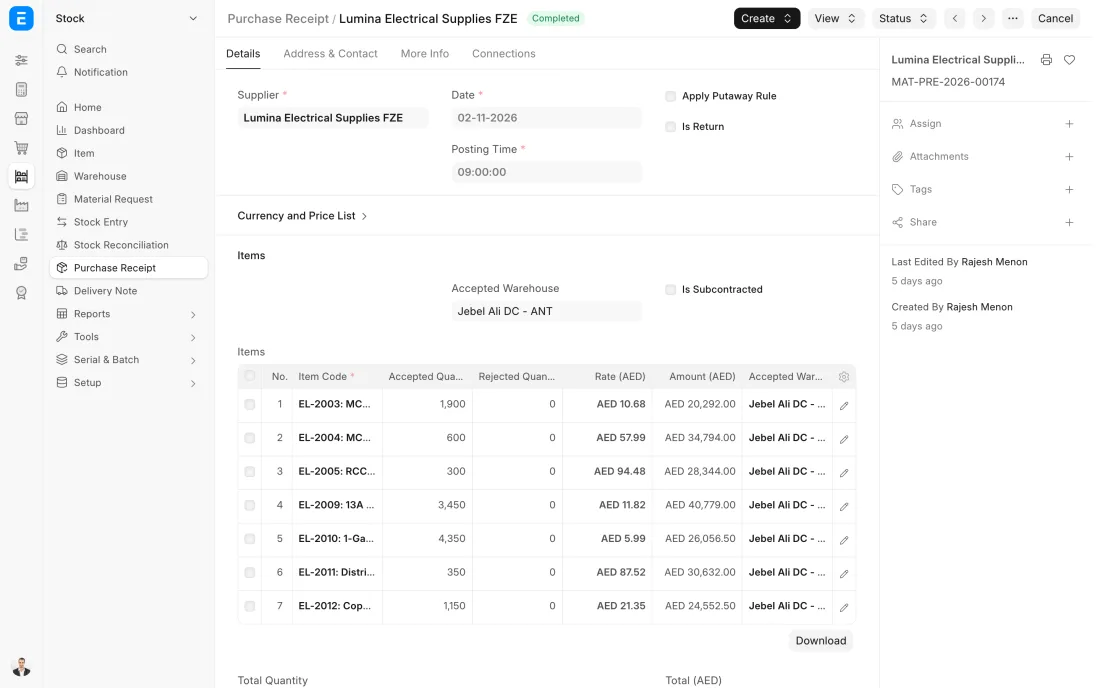
ERPNext 16 · Purchase Receipt -
The main store transfers stock to ward, theatre and clinic stores against their requests, on a Stock Entry of type Material Transfer. The batch that expires first is sent first.
- Who does it
- Storekeeper
- Document that comes out
- Stock Entry (Material Transfer)
ERPNext then does this by itself
- Main store stock goes down and ward stock goes up
- The ward's request shows what has been supplied
- Batch numbers travel with the goods
Without an ERP
Nurses fetch supplies from the main store when a cupboard is empty. Nobody records it, wards hoard what is scarce, and the store learns an item is out when a patient needs it.
-
Medicines dispensed and consumables used are issued from the pharmacy or ward store with their batch. Items for a patient go on the patient's bill. Items used by the department itself are issued to its cost centre.
- Who does it
- Pharmacist or nurse
- Document that comes out
- Delivery Note or Stock Entry (Material Issue)
ERPNext then does this by itself
- The batch nearest expiry is offered first when set up that way
- Stock in the ward store goes down at once
- Usage is recorded per ward or department
Without an ERP
Items are taken from the cupboard and written up at the end of the shift, or not at all. Patients are not charged for what they used, and stock drifts every day.
-
Controlled medicines are counted on a short cycle, as often as your licence and policy require, and checked against the system balance. Other items are counted on a rolling schedule, ward by ward. Counts are entered in a Stock Reconciliation by batch.
- Who does it
- Storekeeper and count team
- Document that comes out
- Stock Reconciliation
ERPNext then does this by itself
- The current system quantity and value are fetched for each item
- The difference is worked out line by line
- Nothing changes in stock until the reconciliation is submitted
Without an ERP
The controlled drugs register and the cupboard disagree, and nobody can say since when. Finding the gap means going back through weeks of paper.
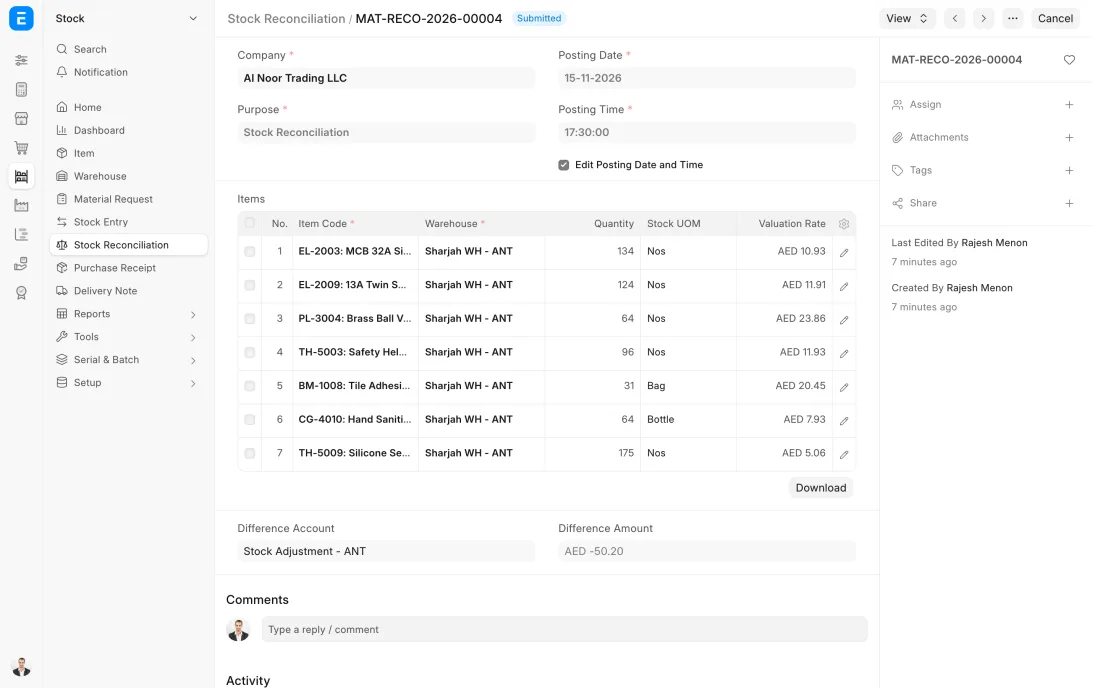
ERPNext 16 · Stock Reconciliation -
Each month the pharmacy reviews stock value by age and the items that have barely moved. Lines that are no longer prescribed come off the reorder list, and stock another department can still use is transferred there.
- Who does it
- Store manager and accountant
- Document that comes out
- Stock Ageing report
ERPNext then does this by itself
- Age is worked out from the date each quantity was received
- Quantity and value are shown for each age band
Without an ERP
Purchasing keeps buying a medicine the doctors stopped prescribing. The shelf fills with stock that will expire unused.
The Full map adds 10 more steps: the approvals, checks and branches between these.
A ward's stock of saline falls below its level. The main store tops it up the same day from the batch that expires first, and a batch with two months left is set aside for return to the supplier.
What changes in a clinic or hospital. The same process, the steps this industry really uses.
-
Batch and expiry on every item
No medicine or sterile consumable enters stock without its batch number and expiry date, so any pack can be traced back to its delivery and forward to where it went.
-
First to expire goes first
ERPNext can be set to offer the batch nearest its expiry on every issue, so older stock is used before newer stock.
-
Wards hold their own small stores
Each ward or department has a sub-store with its own levels. The main store tops them up, and usage is seen ward by ward.
-
Sensitive items are counted more often
Controlled medicines and high-value items are counted on a short cycle and checked against the system, by two people where your rules ask for it.
Where this map leads
Processes feed each other. Follow the work into the next map.
Free tool
Build your company's map
Pick your industry and the processes you run. Get one printable document with every map and step, ready to show your team or your ERP partner.
- Inventory management
- Purchase to pay
- Patient to payment
- Hire to retire
- VAT return
Questions about inventory management
Ask us anything elseCan ERPNext issue stock by expiry date, first expiry first out?
How do we manage ward and department stores?
How often should controlled medicines be counted?
See this process run on your own data
A 45-minute ERPNext demo that follows this map with an example from your business.