
Process map · Any company
Inventory management, step by step
Inventory management is how goods are received, stored, moved, issued and counted, so that the stock figure on the screen matches the shelf. It usually hurts when stock is updated after the fact: sales promise goods that are not there, buyers reorder what is sitting in another store, and the count at year end is a shock. In ERPNext every movement is a document, and each one updates quantity and value the moment it is submitted.
The full map is free
13 steps, 2 decisions, 2 roads into other maps. Sign in once to open every approval and branch, larger ERPNext screens and a printable sheet.
Select a step to see who does it, the document and the ERPNext screen.
Step by step
-
Goods arrive and are received against the Purchase Order, so the storekeeper sees what was ordered and enters what really came. Short, extra or damaged quantities are recorded at the door, and rejected goods go to a separate store.
- Who does it
- Storekeeper
- Document that comes out
- Purchase Receipt
ERPNext then does this by itself
- Stock goes up in the chosen warehouse on submit
- The Purchase Order shows how much is received and how much is still due
- The goods are valued at the purchase price
Without an ERP
Deliveries are signed for on the supplier's paper and entered at the end of the week. Shortages are noticed after the invoice is paid, and nobody can prove what arrived.
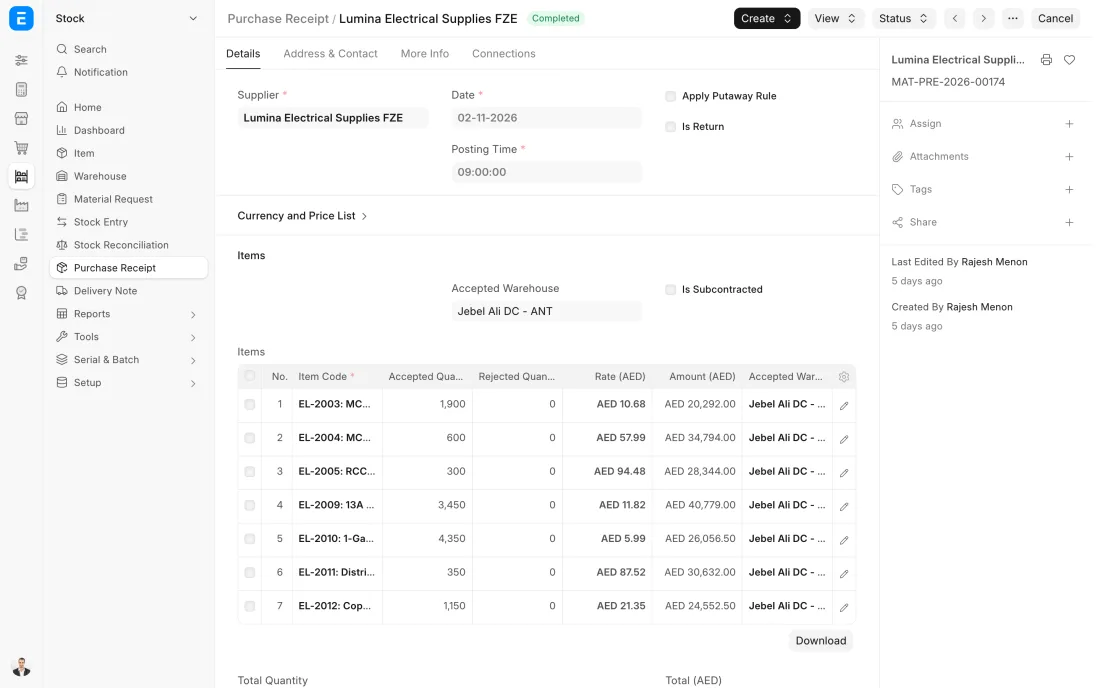
ERPNext 16 · Purchase Receipt -
Stock moves between warehouses, branches or racks on a Stock Entry of type Material Transfer: from where, to where, which items and which batches. A store that needs goods can ask for them with a Material Request, and the transfer is made from that request.
- Who does it
- Storekeeper
- Document that comes out
- Stock Entry (Material Transfer)
ERPNext then does this by itself
- Stock leaves one warehouse and arrives in the other in the same entry
- The value moves with the goods at their cost
- The request shows how much of it has been transferred
Without an ERP
A van takes goods to the other branch on a phone call. Both stores' figures are wrong, and when a carton goes missing on the way, neither side owns the loss.
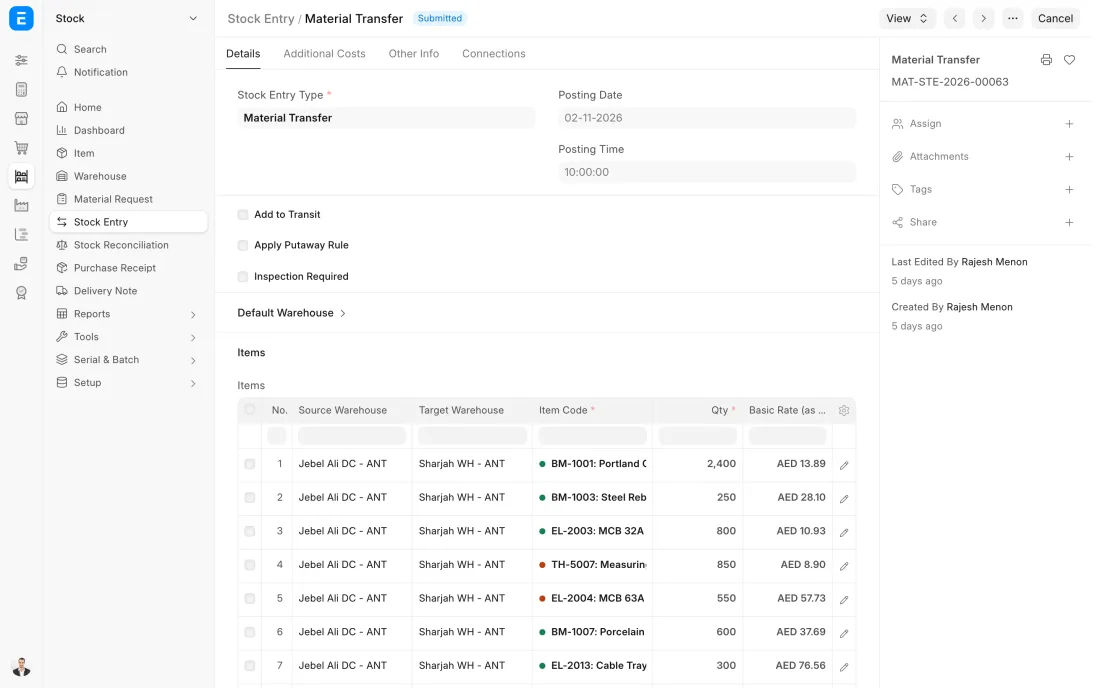
ERPNext 16 · Stock Entry (Material Transfer) -
Goods leave the store in one of two ways. Goods sold go out on a Delivery Note made from the Sales Order. Goods used inside the company, such as consumables, samples or spares, go out on a Stock Entry of type Material Issue, charged to a cost centre.
- Who does it
- Storekeeper
- Document that comes out
- Delivery Note or Stock Entry (Material Issue)
ERPNext then does this by itself
- Stock goes down the moment the document is submitted
- The cost of the goods is posted to cost of sales or to an expense account
- Batch and serial numbers are kept on the document
Without an ERP
Items leave on a signature in a register. Internal use is never booked, so the difference between the sheet and the shelf grows quietly until the count.
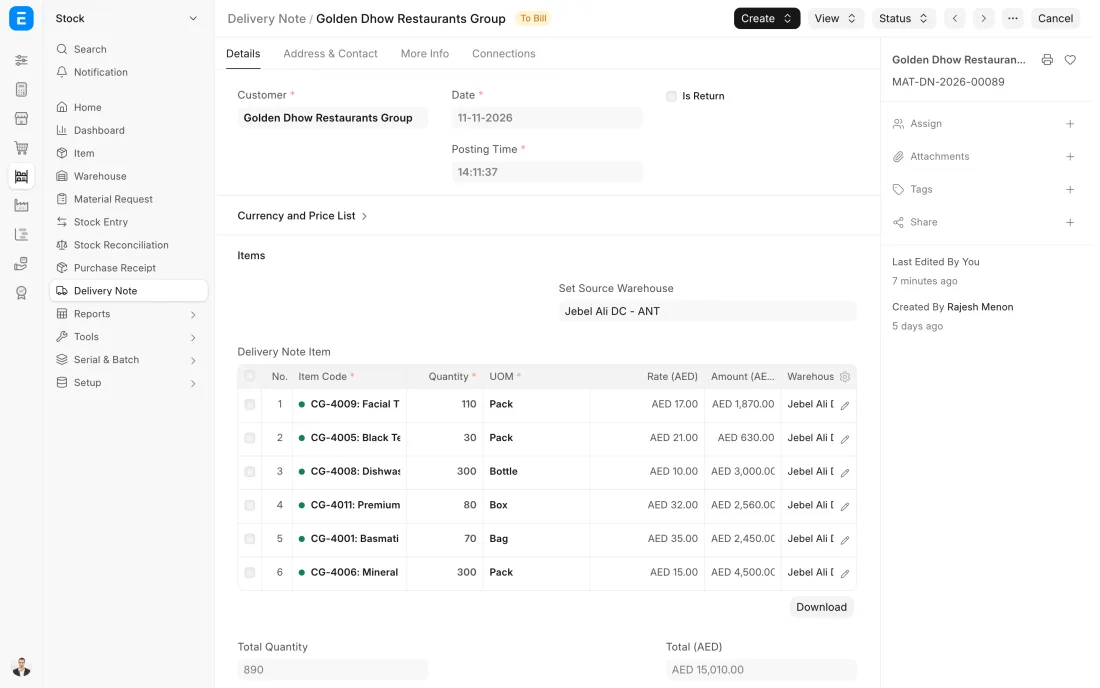
ERPNext 16 · Delivery Note -
On a schedule, part of the store is counted: fast or valuable items often, everything at least once a year. The counted quantities are entered or uploaded into a Stock Reconciliation, and ERPNext shows the difference from the system figure for each item, in quantity and in value.
- Who does it
- Storekeeper and count team
- Document that comes out
- Stock Reconciliation
ERPNext then does this by itself
- The current system quantity and value are fetched for each item
- The difference is worked out line by line
- Nothing changes in stock until the reconciliation is submitted
Without an ERP
The whole company stops for two days once a year to count. The sheets are typed up a week later, by when the stock has moved and the differences mean nothing.
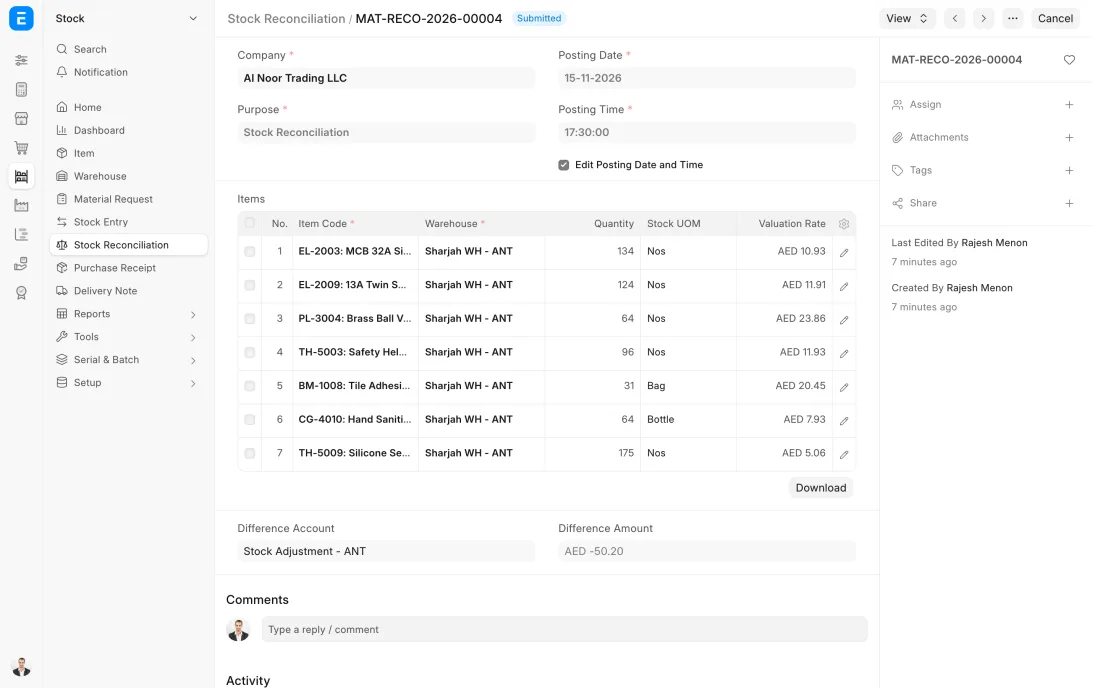
ERPNext 16 · Stock Reconciliation -
Once a month the Stock Ageing report shows how long each item has been sitting, by age band and value. Slow movers are discounted, moved to a branch that sells them or returned to the supplier, and the reorder levels of items that no longer sell are lowered or removed.
- Who does it
- Store manager and accountant
- Document that comes out
- Stock Ageing report
ERPNext then does this by itself
- Age is worked out from the date each quantity was received
- Quantity and value are shown for each age band
Without an ERP
Dead stock is found when the warehouse is full. Cash sat on the back racks for years, and the reorder sheet kept buying more of the same items.
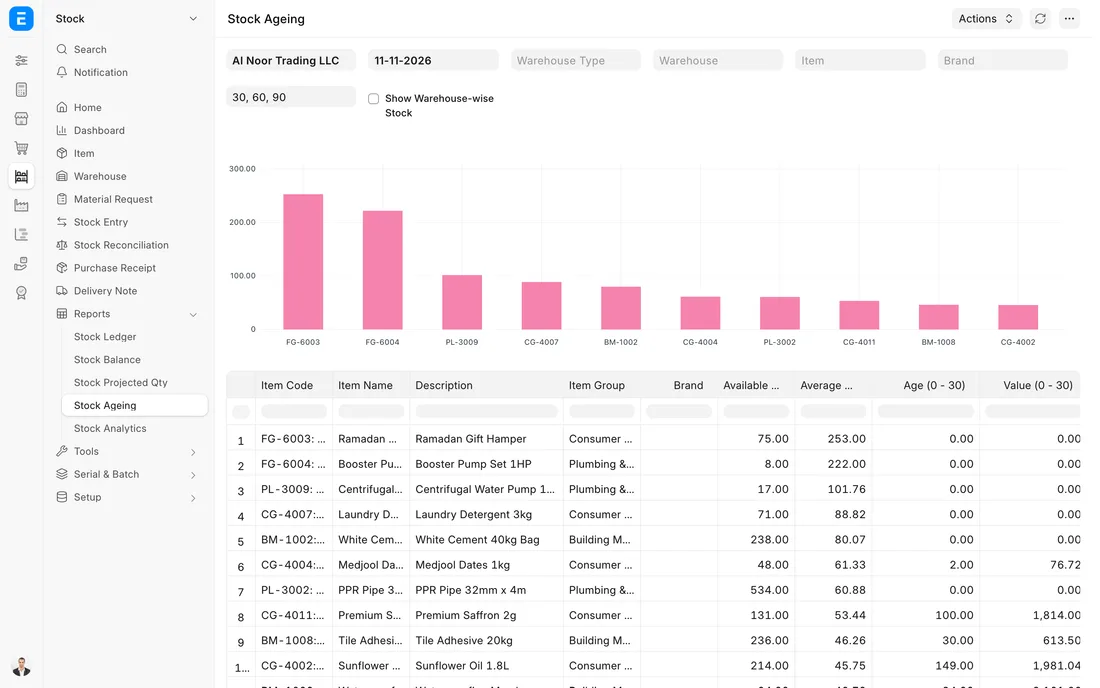
ERPNext 16 · Stock Ageing report
The Full map adds 8 more steps: the approvals, checks and branches between these.
A pallet of 40 cartons arrives. The storekeeper receives it against the purchase order, the batch is recorded, and sales can see the stock on screen before the pallet is on the rack.
Where this map leads
Processes feed each other. Follow the work into the next map.
Free tool
Build your company's map
Pick your industry and the processes you run. Get one printable document with every map and step, ready to show your team or your ERP partner.
- Inventory management
- Order to cash
- Purchase to pay
- Plan to produce
- Project to bill
Questions about inventory management
Ask us anything elseWhat is inventory management in an ERP system?
Why does our stock in the system never match the shelf?
How does automatic reordering work in ERPNext?
How often should we count stock?
Which stock valuation methods does ERPNext support?
Can ERPNext track batches and serial numbers?
See this process run on your own data
A 45-minute ERPNext demo that follows this map with an example from your business.